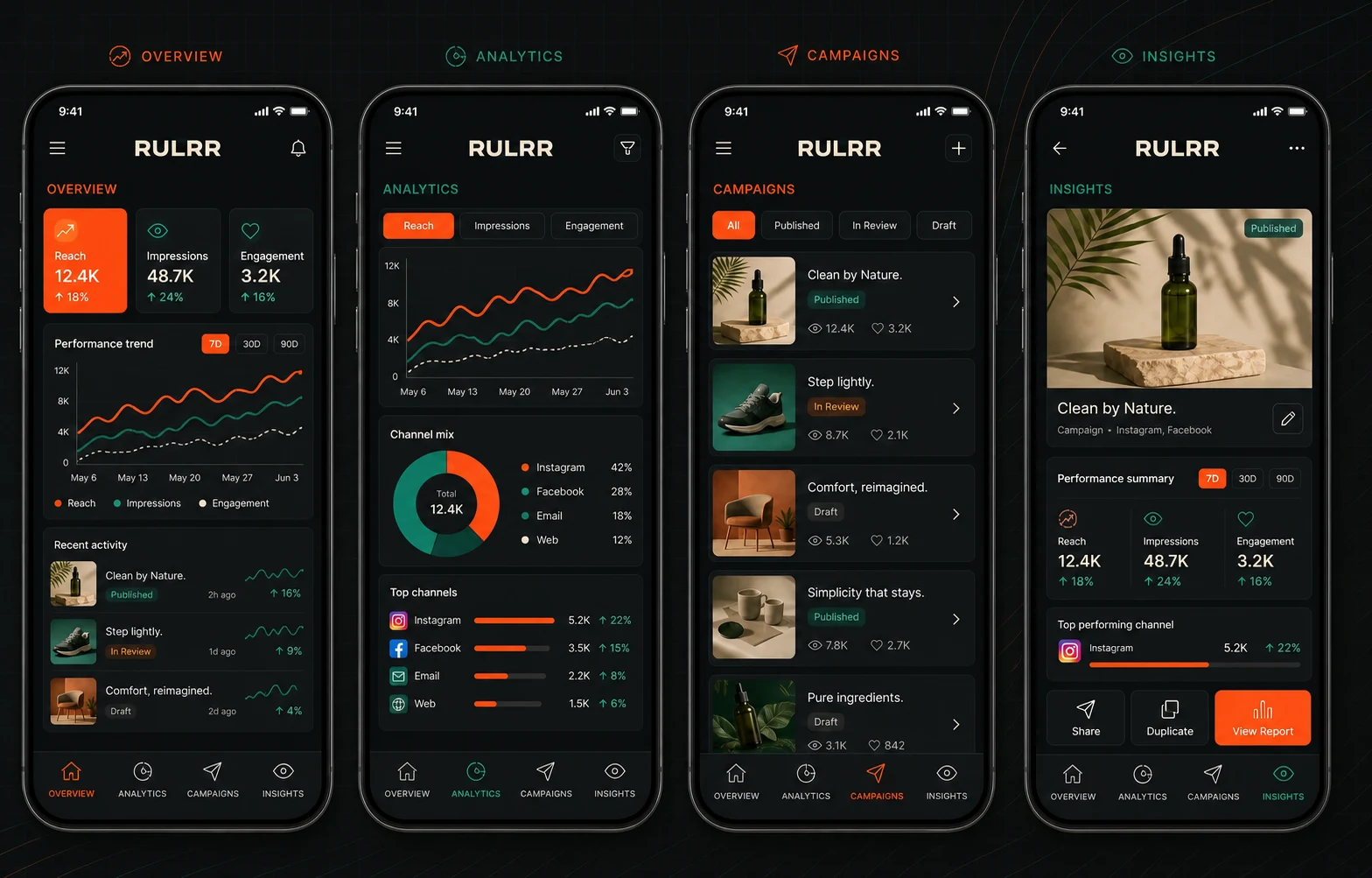
A confidentiality-safe account of building a coherent product frontend without exposing Rulrr’s actual interface or private product implementation.
Conceptual mobile product experiencePortfolio visualization—not the actual Rulrr UI
Context
A product surface that had to stay clear as the system grew.
My frontend role centered on turning product requirements into dependable user-facing flows. The work required careful handling of interface states, reusable patterns, responsive behavior, and the details that make a product feel coherent across repeated use.
Contribution
From requirement to maintainable interaction.
I worked across the frontend lifecycle: understanding the intended behavior, structuring reusable pieces, implementing responsive layouts, connecting application state, and refining interaction feedback with the wider team.
Engineering focus
Consistency without making the product rigid.
Reusable component patterns for shared product behavior
Clear loading, empty, success, and error states
Responsive layouts across practical screen sizes
Maintainable frontend structure for continued iteration
Cross-functional delivery with product and engineering teammates
Outcome
A stronger base for ongoing product delivery.
The result was not a single showcase screen. It was a more consistent frontend foundation that supported new product work, clearer interaction states, and smoother collaboration as Rulrr 2.0 continued to evolve.
Responsible disclosure
What this case study intentionally leaves out.
No real Rulrr UI, screen recreation, customer data, internal route, private component, unreleased capability, or confidential performance metric appears on this page. The visual above is an original conceptual mobile showcase using fictional data only to communicate the nature of frontend work.